Two Types of Wire Gauge Charts
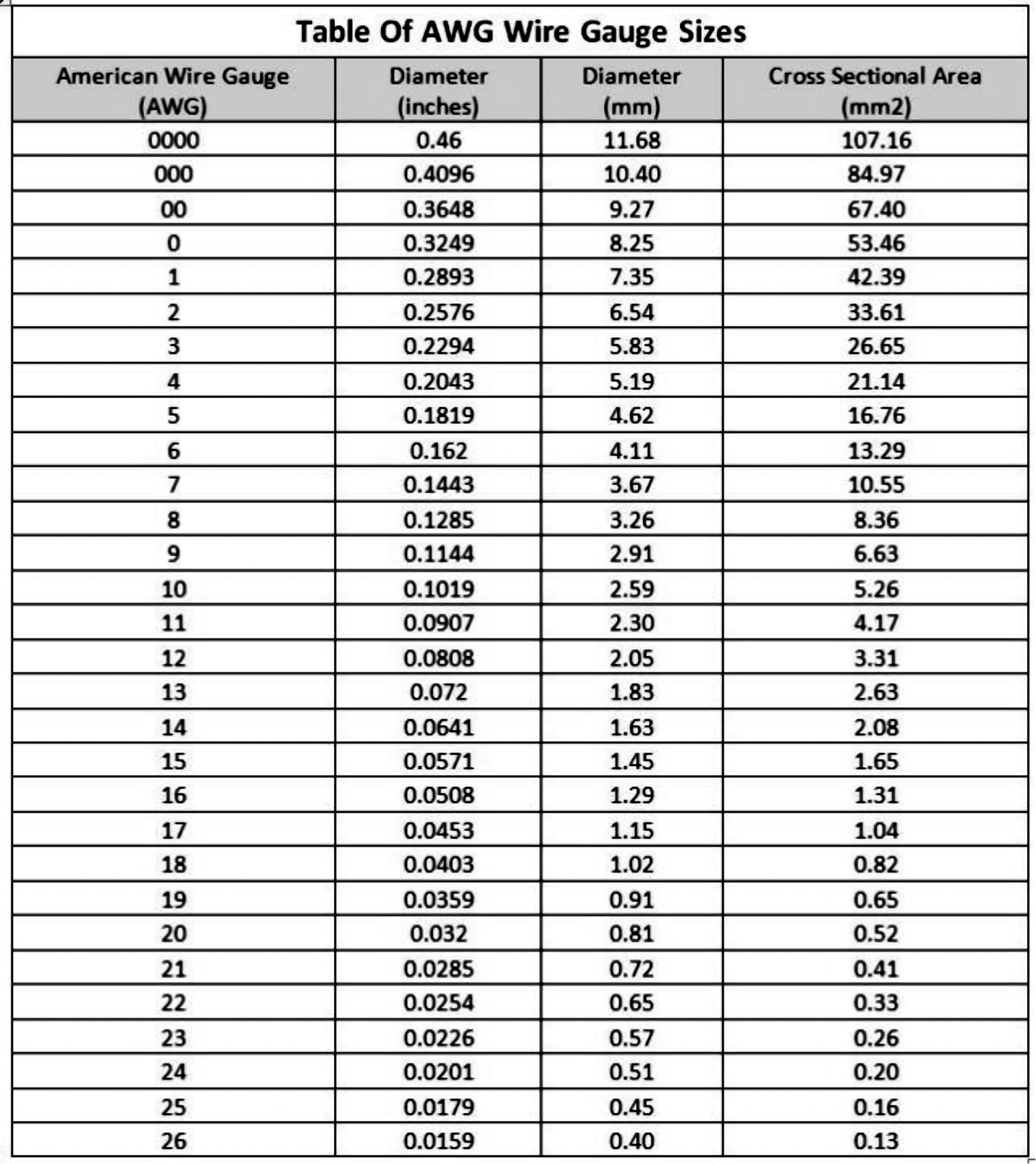
The Steel Wire Gauge (SWG) chart is used for most steel wire whereas the American Wire Gauge (AWG) chart is commonly used for other than steel wire, such as copper, brass, and aluminum. Both have different sizes for the respective Gauge. As an example, for SWG, #10 gauge = .135" whereas the AWG, #10 gauge = .10189". However, some companies use them interchangeably. So it is always best to specify both the gauge and the actual decimal requirement vs. just listing the gauge number. Example: #10 (.135").
Wire Gauge Chart in Reverse
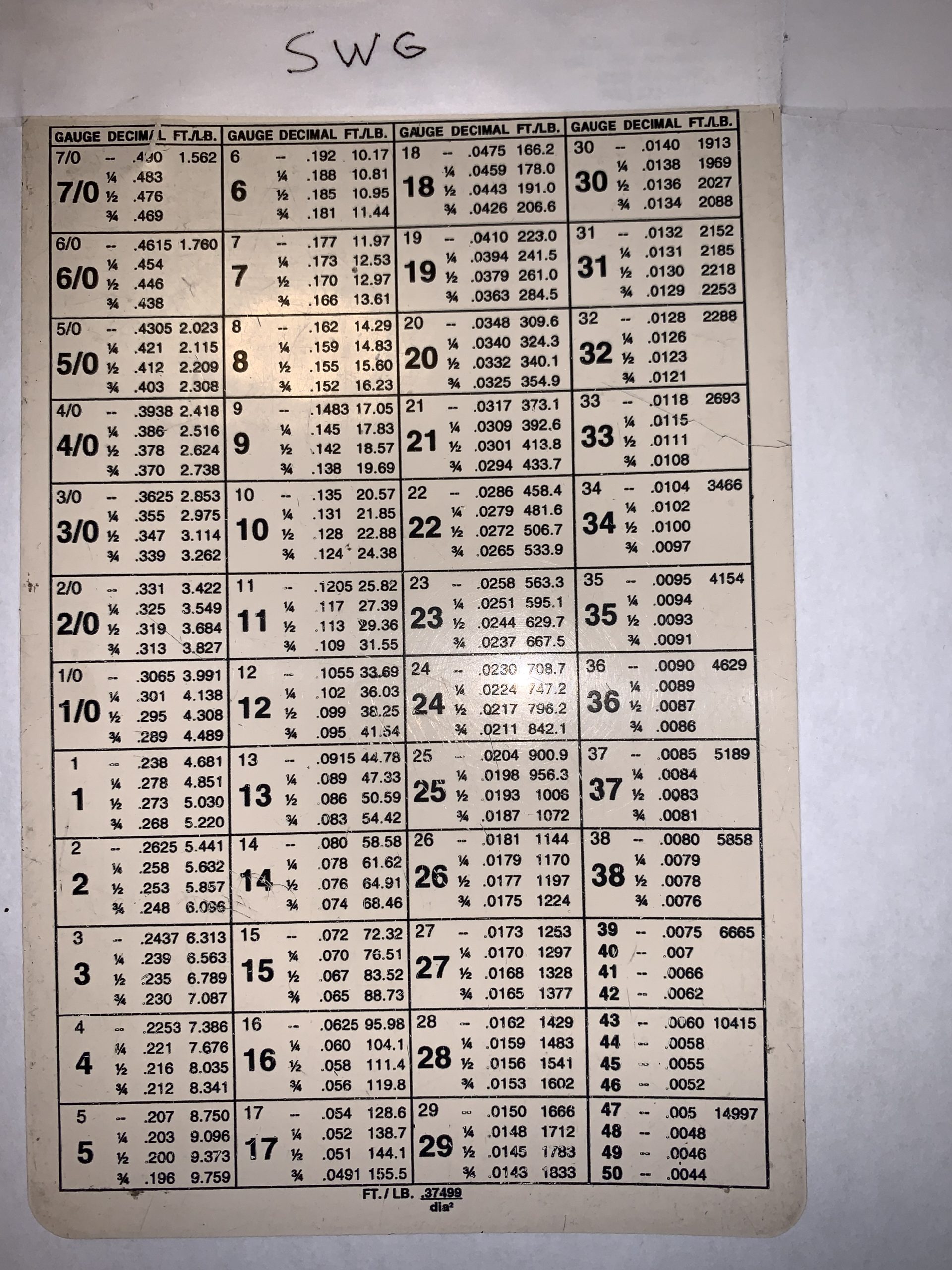
For wire Gauge charts such as the Steel Wire Gauge (SWG) and American Wire Gauge (AWG), the gauge size is intuitively in reverse. As an example, for the SWG chart, you might think that the #10 Gauge is smaller than the #16 Gauge. In fact, #10 = .135" and #16 = .0625".
Understanding the Decimal Reading in the Steel Wire Gauge Chart
For the Steel Wire Gauge (SWG) chart, there is the nominal decimal (-), 1/4, 1/2, and 3/4 for each Gauge. As an example, #6 Gauge is normally recognized as .192"; #7 as .177" - these are the nominal diameters. However, there may be cases when the diameter is needed in-between #6 and #7 Gauges such as .185". In this case, the proper designation is #6-1/2 Gauge.How to Determine How Much Wire You Need
To determine how much Length (ft., in, etc.) of wire you need, you will need to know the Material, i.e., Steel, Aluminum, Stainless, Nickel, the Shape (round for wire), the Wire Diameter, and the Weight (lbs.) of wire you need. Conversely, to know how much Weight (lbs.) you need, you will need to know how much length you require and the Diameter. There are complex formulas that you can use to calculate these requirements but fortunately, there are many calculators on the web that do it for you. Some calculators do not require the Material type but know, that if you use these calculators, your results will vary somewhat as there are different physical and chemical properties of the various materials that affect the results. Some sample sites:http://www.calculatoredge.com/matweight/material%20wt.htm
http://www.mjwire.com/wire-calculator/


Comments (0)
Leave a Comment